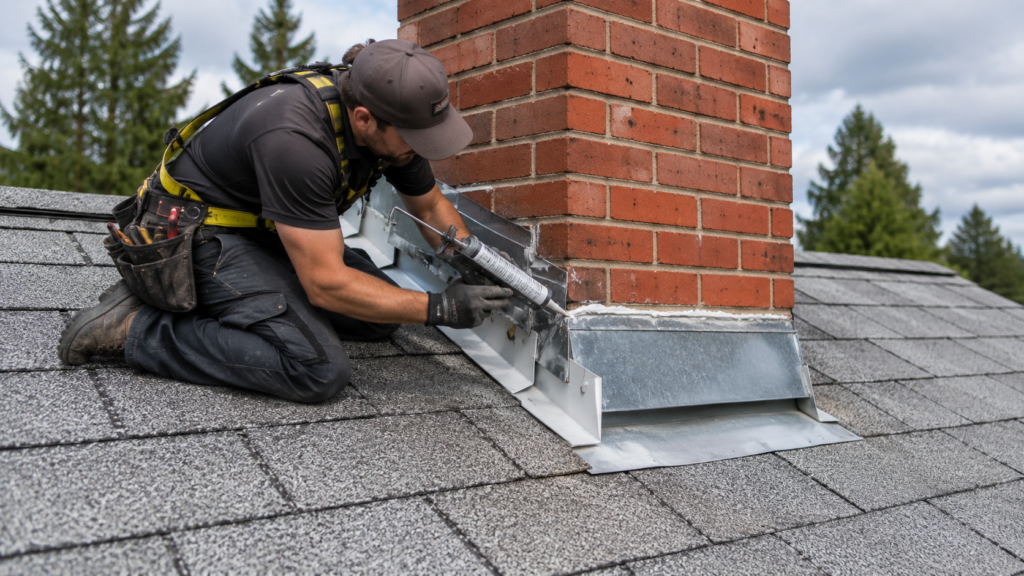
Most Worcester homeowners think about their chimney only in winter, but heavy rain is just as destructive. Water is the single biggest threat to your chimney system, and even one powerful rainstorm can silently set off a chain of structural problems that leads to hundreds, sometimes thousands, of dollars in repairs. In this guide, we’ll break down exactly how heavy rain damages your chimney, what warning signs to watch for, and why professional chimney cleaning in Worcester after storm season is not optional; it’s essential.
Why Rain Is Your Chimney’s Worst Enemy
Your chimney is one of the most weather-exposed structures on your home. Day and night, through every season, it stands fully open to the sky. While most people worry about creosote buildup or animal nests, water intrusion is actually the leading cause of chimney deterioration in homes across New England.
Unlike light drizzle, heavy rain delivers a high volume of water in a short time. This overpowers your chimney’s natural drainage design, forcing moisture through hairline cracks, loose seals, and porous masonry. Once water enters your chimney system, it doesn’t simply evaporate; it travels downward through every vulnerable point, expanding inside brickwork, accelerating rust on metal components, and eventually reaching your home’s interior walls and ceilings.
For homeowners in Worcester, MA, the problem is compounded by New England’s climate. Winter freeze-thaw cycles weaken mortar joints each year. When heavy spring and summer rains arrive, they find a chimney already compromised, and the combination is brutal. This is precisely why scheduling chimney cleaning in Worcester before and after storm season is the smartest investment you can make for your home.
The 6 Ways Heavy Rain Damages Your Chimney
Rain doesn’t damage every chimney the same way. It exploits whatever weakness already exists. Here are the six most common failure points that heavy rainfall attacks:
Cracked Mortar Joints
Mortar between your bricks is porous by nature. Heavy rain speeds up the natural erosion process, opening cracks that allow water to penetrate deep into the chimney wall and eventually into your home.
Damaged Chimney Crown
The concrete crown at the top of your chimney is the first line of defence. Even small cracks in the crown turn into major entry points during a downpour, allowing water to pour directly into the flue.
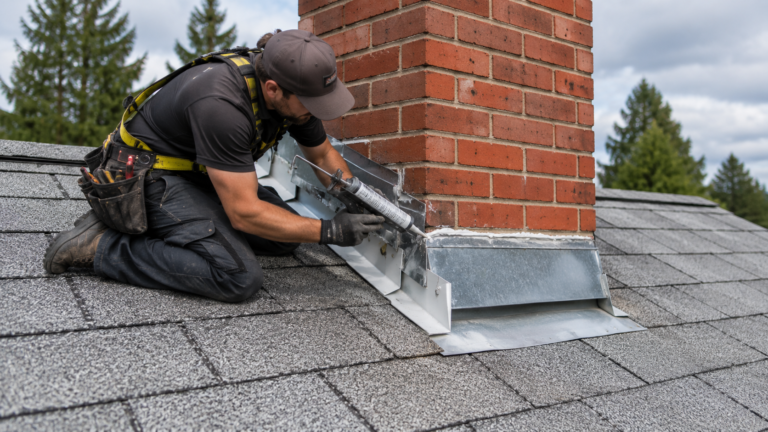
Failed Chimney Flashing
Flashing seals the gap between your chimney and roof. When it separates or corrodes, it becomes the #1 source of chimney water damage, and it often looks like a regular roof leak.
Dislodged or Missing Cap
Heavy wind-driven rain can displace your chimney cap, leaving your flue wide open. Without a cap, rain floods the flue directly, soaking the liner, damper, and firebox floor below.
Liner Deterioration
When water enters a cracked or unlined flue, it attacks the clay tile or stainless steel liner. A deteriorated liner is not just a structural problem it’s a carbon monoxide and fire hazard.
Spalling Bricks (Efflorescence)
White chalky stains on your chimney exterior are a major red flag. Called “efflorescence”, they signal that water is penetrating your masonry and leaching out mineral salts, a sign of deep moisture absorption.
Rain Damage Severity: What to Expect
Not all chimney damage presents itself immediately. Some issues become visible only after weeks or months. This table gives you a quick overview of common rain-related chimney problems, how severe they are, and what typically causes them.
| Damage Type | Cause | Severity | Action Required |
| Cracked chimney crown | Water pooling on top of chimney | High | Crown repair or replacement |
| Failed flashing | Separation from chimney / roof movement | High | Re-seal or replace flashing |
| Mortar joint erosion | Water penetration + freeze-thaw cycles | High | Tuckpointing |
| Missing chimney cap | Wind-driven rain, storm displacement | Medium | Immediate cap replacement |
| Efflorescence (white stains) | Water evaporating from masonry | Medium | Waterproofing + inspection |
| Rust on damper or firebox | Moisture entering flue | Medium | Component cleaning/replacement |
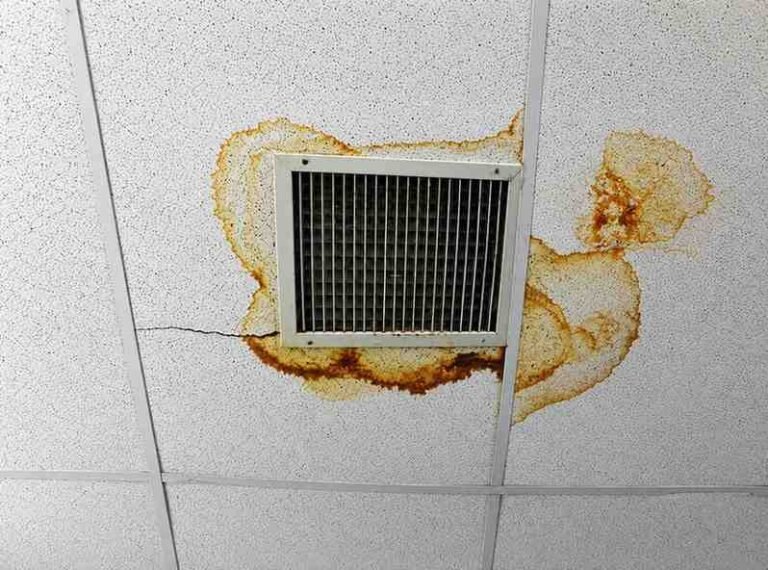
| Water stains on ceiling/walls | Internal water migration | High | Urgent inspection + repair |
| Musty fireplace odor | Moisture + soot mixing in flue | Medium | Chimney cleaning + inspection |
Warning Signs Your Chimney Has Rain Damage Right Now
Many Worcester homeowners don’t realise their chimney has been damaged by rain until the damage is already advanced. Here are the key warning signs you should never ignore:
Don’t Ignore These Warning Signs
- White, chalky stains (efflorescence) on the exterior brickwork
- Brown or yellow water stains on walls or ceilings near the fireplace
- A musty, damp smell coming from the fireplace even in summer
- Crumbling or missing mortar between bricks
- Rust stains inside the firebox or on the damper
- Visible cracks in the chimney crown (visible from roof level)
- Water pooling inside your firebox after heavy rain
- Peeling paint or wallpaper on walls adjacent to the chimney
If you notice any of these signs, the problem is already underway. The longer you wait, the more extensive and expensive the damage becomes. Moisture travels downward and outward through masonry, reaching structural timbers and interior walls before you can see it from the inside.
Read more: What Does Chimney Sweep Actually Involve?
The Freeze-Thaw Effect: A Worcester-Specific Problem
Homeowners in Worcester, Massachusetts, face a uniquely harsh chimney environment. New England winters expose chimneys to repeated freeze-thaw cycles, water seeps into porous brick and mortar, freezes and expands, then thaws, leaving slightly wider cracks each time. By spring, the chimney’s masonry can be significantly weakened even if it looks fine from the street.
When heavy spring rains arrive, often the heaviest rainfall Worcester sees all year, they hit a chimney already compromised by months of freeze-thaw stress. The result is accelerated damage: mortar washes out faster, crowns crack more easily, and flashing separates along weakened seams. This seasonal pattern is exactly why a post-winter, pre-storm-season chimney cleaning in Worcester is the most important maintenance step any homeowner here can take.
How to Protect Your Chimney from Heavy Rain
The good news is that rain damage to your chimney is almost entirely preventable with the right maintenance routine. Here’s a step-by-step approach that professional chimney technicians at Airvance Solutions recommend for every Worcester homeowner:
Schedule an Annual Chimney Inspection
A certified chimney sweep will identify weak points, cracked crowns, failing flashing, and eroded mortar before the rain finds them. Annual inspection is the single most effective preventive measure available.
Repair Mortar Joints with Tuckpointing
A certified chimney sweep will identify weak points, cracked crowns, failing flashing, and eroded mortar before the rain finds them. Annual inspection is the single most effective preventive measure available.
Repair or Replace the Chimney Crown
Any cracks in the crown should be sealed with a flexible, elastomeric sealant, or the crown should be rebuilt. A properly functioning crown sheds water away from the flue opening and brickwork.
Inspect and Re-Seal Chimney Flashing
Flashing should be checked annually and after every major storm. Damaged or separated flashing needs to be re-sealed with roofing cement or replaced entirely to maintain a watertight seal at the roof junction.
Install or Replace Your Chimney Cap
A quality stainless steel chimney cap keeps rain, debris, and animals out of your flue year-round. After any major storm, verify that your cap is still securely in place.
Read more: Why Regular Chimney Cleaning is Essential for Home Safety?
Apply Professional Waterproofing Sealant
A vapour-permeable silane/siloxane waterproofing sealant applied to the chimney’s exterior masonry creates a barrier that repels rain while still allowing moisture vapour to escape from inside, protecting the structure without trapping harmful gases.
Why Professional Chimney Cleaning in Worcester Matters After Rain
Rain doesn’t just damage your chimney’s structure; it changes what’s inside the flue. When water mixes with accumulated creosote, ash, and soot, it creates a thick, acidic slurry that clings to your liner, accelerates corrosion, and produces an unpleasant, persistent odour throughout your home. This mixture can also clog the flue, reducing draft efficiency and creating a carbon monoxide risk when you next use your fireplace.
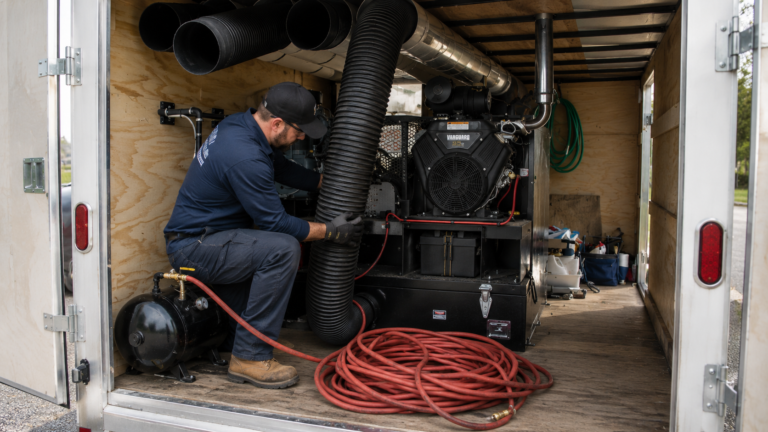
Professional chimney cleaning in Worcester removes this post-rain buildup completely, using industrial-grade brushes and vacuum systems designed to capture every particle. A trained technician will also inspect the interior of the flue for rain-related cracks or liner damage that would be completely invisible from outside the chimney, protecting your family from both fire risk and carbon monoxide exposure.
At Airvance Solutions, our chimney cleaning service includes a complimentary inspection of your crown, cap, flashing, and liner condition, so you get a full picture of your chimney’s health after every storm season, not just a sweep of the visible surfaces.
Read more: What Does a Chimney Sweep Service in Worcester Actually Include?
Frequently Asked Questions
Can heavy rain actually damage my chimney in just one storm?
Yes. A single heavy rainstorm can cause significant damage if your chimney already has minor vulnerabilities, a hairline crack in the crown, slightly separated flashing, or eroded mortar joints. The high volume of water in a heavy storm overwhelms defences that hold up fine in normal rain. That’s why a post-storm inspection is always recommended after major weather events.
How do I know if my chimney has water damage?
The most common signs include white, chalky stains (efflorescence) on exterior brickwork, brown or yellow water stains on ceilings or walls near the fireplace, a musty smell from the firebox, crumbling mortar, rust inside the firebox, and water pooling in the firebox after rain. If you notice any of these, contact a professional for an inspection right away.
How often should I schedule chimney cleaning in Worcester?
The National Fire Protection Association (NFPA) recommends at minimum one annual chimney inspection and cleaning. For homes in Worcester, MA, we recommend a pre-winter cleaning in early fall and a post-storm inspection each spring, given the area’s harsh freeze-thaw cycles and heavy spring rainfall.
What is chimney flashing, and why does it fail?
Chimney flashing is a metal (typically aluminium or lead) seal installed at the junction between your chimney and your roof. Its job is to prevent water from entering at this vulnerable seam. Flashing fails due to age-related corrosion, improper installation, roof movement from temperature changes, or physical damage during storms. When it fails, it becomes the single biggest source of chimney-related water damage to your home’s interior structure.
Does Airvance Solutions offer emergency chimney inspections after storms?
Chimney flashing is a metal (typically aluminium or lead) seal installed at the junction between your chimney and your roof. Its job is to prevent water from entering at this vulnerable seam. Flashing fails due to age-related corrosion, improper installation, roof movement from temperature changes, or physical damage during storms. When it fails, it becomes the single biggest source of chimney-related water damage to your home’s interior structure.