Summer in Lowell, Massachusetts, is no joke. When temperatures climb into the 90s and humidity makes the air feel like a warm, wet blanket, the last thing any building owner or facility manager wants is a failing HVAC system. Yet every year, countless commercial properties struggle through heat waves with systems that are working twice as hard as they should, not because the equipment is old, but because the ductwork behind the walls is clogged, leaking, or simply overdue for attention.
The truth is, your air conditioning system is only as effective as the ducts that carry its cooled air. When those ducts are dirty, damaged, or inefficient, no amount of thermostat adjustment will give you the relief you need. That is why commercial duct cleaning in Lowell has become one of the most sought-after services as temperatures rise each summer and why building managers who understand their HVAC infrastructure always stay one step ahead of the heat.
Why Heat Waves Put Your Ductwork to the Test
During a heat wave, your air conditioner runs almost continuously to maintain a set temperature. This high-volume airflow puts immense pressure on your ductwork. If your ducts are clogged with dust, pet dander, or construction debris, the “static pressure” within the system increases. This means your blower motor has to work twice as hard to push air through a narrowed passage.
When air can’t move freely, you experience “hot spots” in your building. You might notice the living room is freezing while the upstairs bedrooms remain sweltering. In a business setting, this inconsistency can drive away customers and frustrate employees. This is why many property managers prioritize commercial duct cleaning in Lowell during the late spring, to ensure the system is “breathing” perfectly before the first heat warning is issued.
The Link Between Airflow and Air Duct Repair Services
Cleaning is essential, but a heat wave often reveals deeper mechanical issues. If you notice that despite a cleaning, certain rooms aren’t getting cold air, you might be dealing with leaks or disconnected joints. This is where air duct repair services become vital.
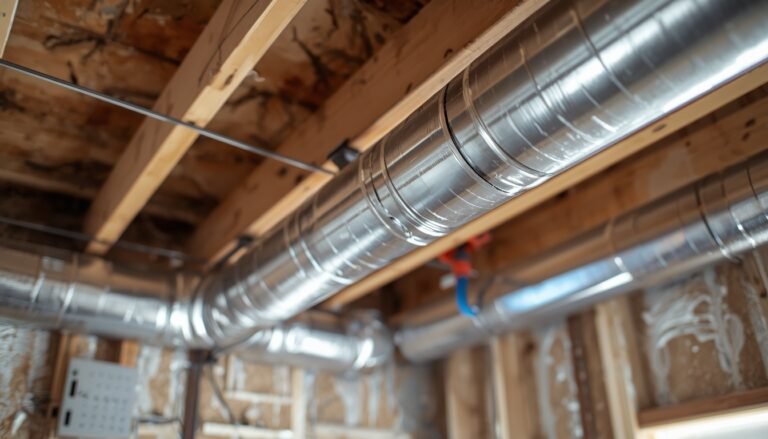
Over time, the sealant or “mastic” used to join duct sections can dry out and crack. During a heat wave, the cold air you are paying for escapes into the attic or crawlspace before it ever reaches your vents. Professional technicians don’t just remove dust; they perform a comprehensive evaluation to see if air duct repair and replacement is necessary to restore the system’s integrity. Patching a single leak can improve cooling efficiency by up to 20%, significantly lowering those spiked summer utility bills.
Precision at Work: Air Duct Cleaning Equipment and Tools
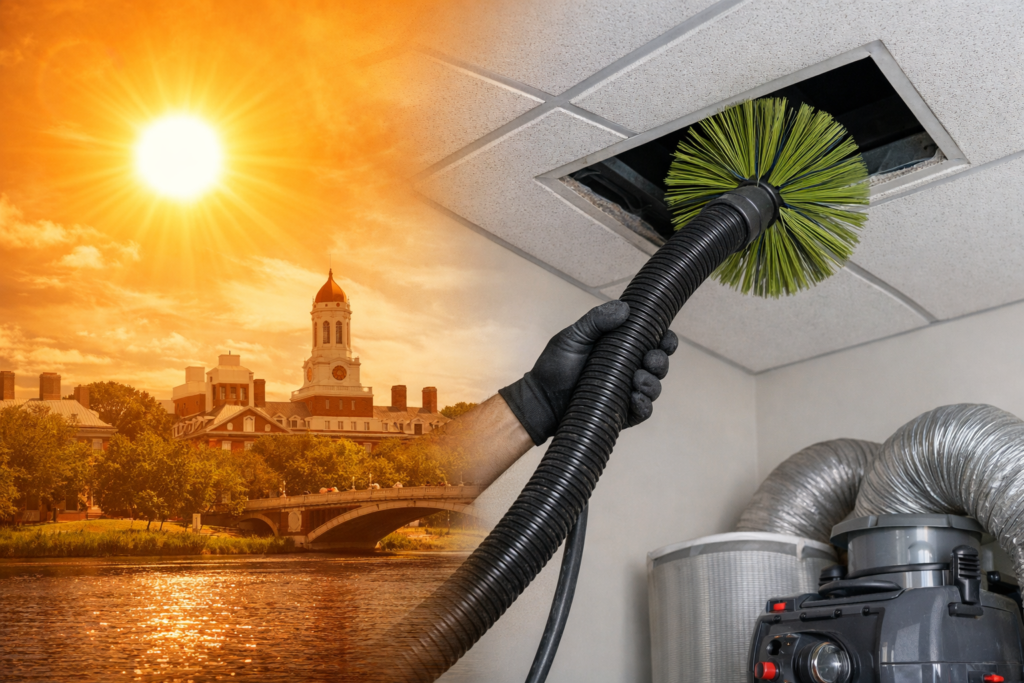
Modern duct maintenance has come a long way from simple vacuuming. To truly survive a Lowell heat wave, your system needs a deep clean that reaches every corner of the plenum and branch lines. This requires professional-grade air duct cleaning equipment.
High-Powered Vacuums
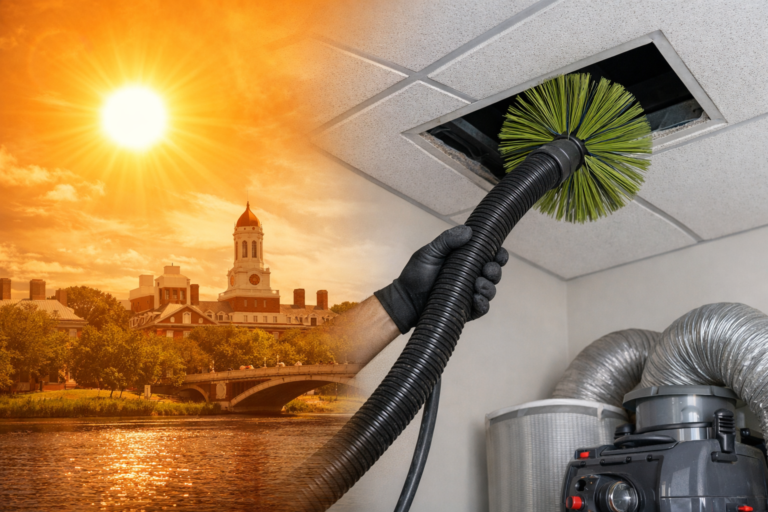
The core of any professional setup is a HEPA-filtered vacuum system. These machines create a “negative pressure” environment within the ductwork. This ensures that as debris is dislodged, it is sucked directly into a containment unit rather than being blown into your home or office.
Specialized Air Duct Cleaning Tools
To break loose the stubborn “caked-on” dust often found in humid environments, technicians use a variety of air duct cleaning tools, including:
- Rotary Brushes: Spinning brushes that scrub the interior walls of the metal ducts.
- Air whips and Skippers: High-pressure compressed air tools that “dance” inside the vents to dislodge dust from tight corners.
- Borescope Cameras: These allow technicians to see exactly where blockages or damage exist, helping them decide if a simple fix or a full air conditioning duct repair is the best course of action.
Improving Indoor Air Quality (IAQ) During Stagnant Heat
Heat waves often come with poor outdoor air quality and high pollen counts. When you are forced to keep your windows shut and recirculate indoor air, the concentration of pollutants inside your building can skyrocket.
If your ducts haven’t been cleaned in years, your HVAC system is essentially a giant “dust lung,” breathing allergens back into your rooms every time the cycle starts. This leads to:
- Increased Allergy Symptoms: Itchy eyes and sneezing even while indoors.
- Musty Odors: Humidity trapped in dust can create a stale, “old basement” smell.
- HVAC Strain: Dust buildup on the evaporator coil can cause the system to freeze up entirely, leaving you with no cooling at all in the middle of a 100°F afternoon.
When Cleaning Isn’t Enough: Air Duct Repair and Replacement
Sometimes, a heat wave acts as the “final straw” for an aging HVAC system. In older Lowell buildings, the ductwork may be made of outdated materials like “fiberboard” or poorly insulated flex duct. If the material has degraded or become infested with mold due to high humidity, cleaning may no longer be an option.
In these scenarios, air duct repair and replacement is the most cost-effective long-term solution. Replacing old, restrictive ducts with properly sized, modern insulated ducting ensures that your air conditioner doesn’t have to fight an uphill battle. If you find yourself frequently calling for air conditioning duct repair, it may be time to consider a full system upgrade to ensure you are ready for future summers.
Practical Tips for Staying Cool in Lowell
While waiting for your professional duct service, here are a few ways to help your system survive the peak of the heat:
- Check Your Filters Monthly: During a heat wave, filters clog faster because the system is running more often. A dirty filter combined with dirty ducts is a recipe for a system breakdown.
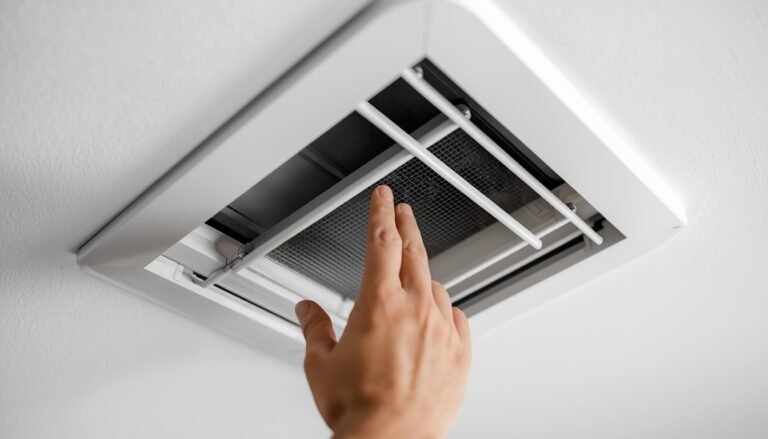
- Keep Vents Unobstructed: Ensure furniture and curtains aren’t blocking return air grilles.
- Close the Blinds: Use blackout curtains on south-facing windows to reduce the “greenhouse effect” inside your rooms.
- Seal the Gaps: Use weatherstripping around doors and windows to keep the cool air in and the Lowell humidity out.
Summer HVAC Maintenance Summary
|
Service Type |
Primary Benefit |
When to Schedule |
|
Duct Cleaning |
Improved Airflow & Air Quality |
Every 3-5 Years |
|
Duct Repair |
Stops Cool Air Loss |
If rooms have uneven temps |
|
Coil Cleaning |
Prevents System Freeze-ups |
Annually before summer |
|
Duct Replacement |
Maximum Energy Efficiency |
If ducts are 20+ years old |
Conclusion: Don’t Wait for Winter
A heat wave is a test of endurance, not just for you, but for your building’s mechanical systems. By investing in professional maintenance, you aren’t just buying a cleaning; you are buying reliability. From utilizing the best air duct cleaning equipment to performing essential air conditioning duct repair, taking care of your vents is the most effective way to ensure a comfortable summer.
Whether you are a homeowner looking for air duct repair services or a business owner needing commercial duct cleaning in Lowell, don’t wait for the temperature to hit triple digits. Clear the dust, seal the leaks, and breathe easy knowing your system is optimized to handle whatever the Massachusetts summer throws your way.
Frequently Asked Questions
How to clean heating and air conditioning ducts yourself?
You can safely vacuum register grilles and reachable vent areas using a household vacuum. However, deep cleaning requires specialized high-pressure tools to reach the entire network without damaging fragile linings, so it’s best to hire a professional air conditioning ducts cleaning service for safe and effective results.
Can I use a shop-vac for DIY air duct cleaning?
A shop-vac helps with surface debris but lacks the negative pressure needed for a full system purge. To ensure deep and safe cleaning, it’s best to hire a professional air conditioning ducts service. Professionals use industrial HEPA vacuums to ensure dust is extracted entirely from your home.
How can I get an accurate quote for my property?
The most reliable way is to schedule a professional inspection. A technician will evaluate your ductwork’s condition and layout to provide a specific quote tailored to your system’s unique requirements.
How much is air duct cleaning for a standard home?
The cost depends on your home’s total square footage, the number of vent openings, and current dust levels. A professional inspection is necessary to provide a specific, accurate quote.