Living in Boston is incredible, but the city creates a perfect storm for dirty ductwork. You’re dealing with salt-heavy Atlantic air off the harbor, heavy construction dust from the Seaport and downtown development, and the decades of debris locked inside the walls of historic Back Bay brownstones and triple-deckers. Add New England’s extreme temperature swings, and your HVAC system runs hard all year long, pulling all of that into your duct system.
The EPA estimates that indoor air can be 2 to 5 times more polluted than outdoor air, and your air ducts are a major reason why. Whether you own a home in Beacon Hill or manage a commercial building in Cambridge, the warning signs below apply to you.
Visible Dust & Debris Around Your Vents
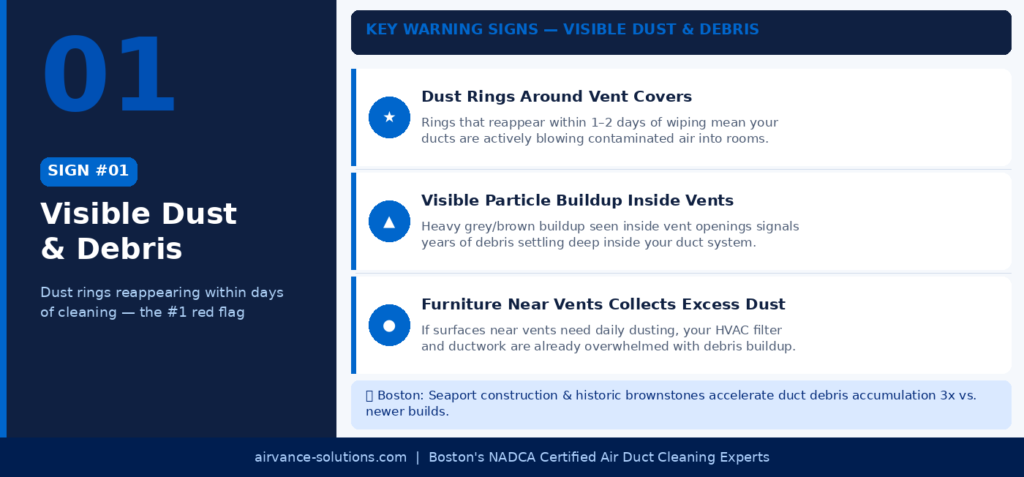
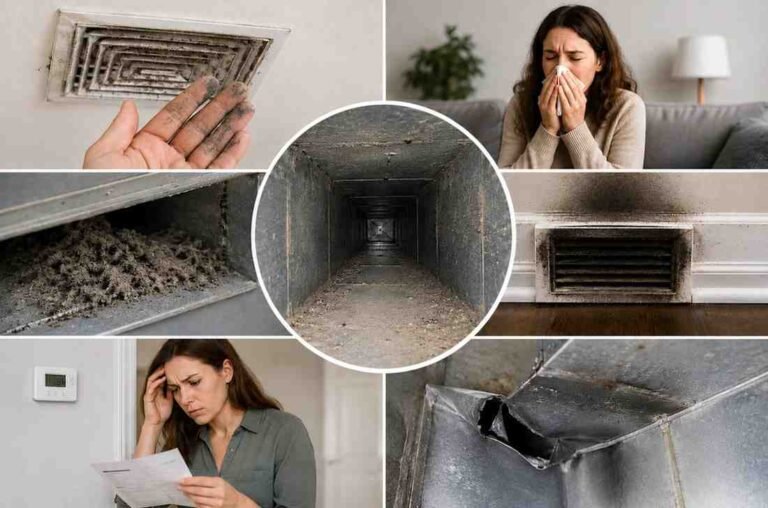
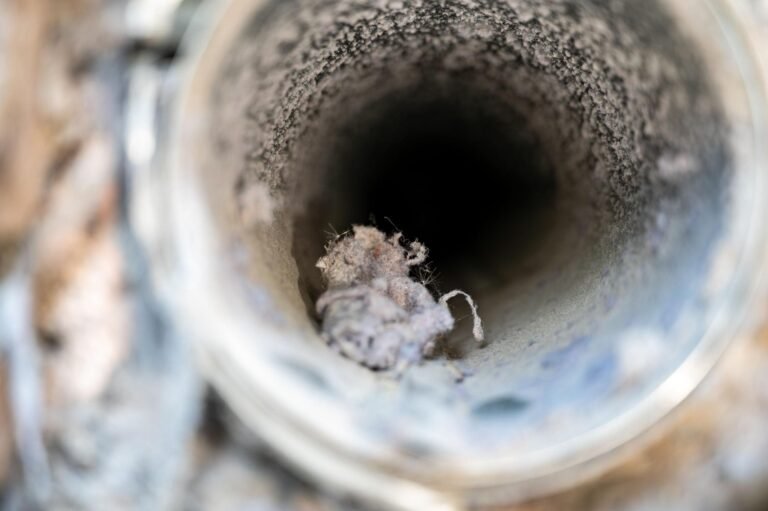
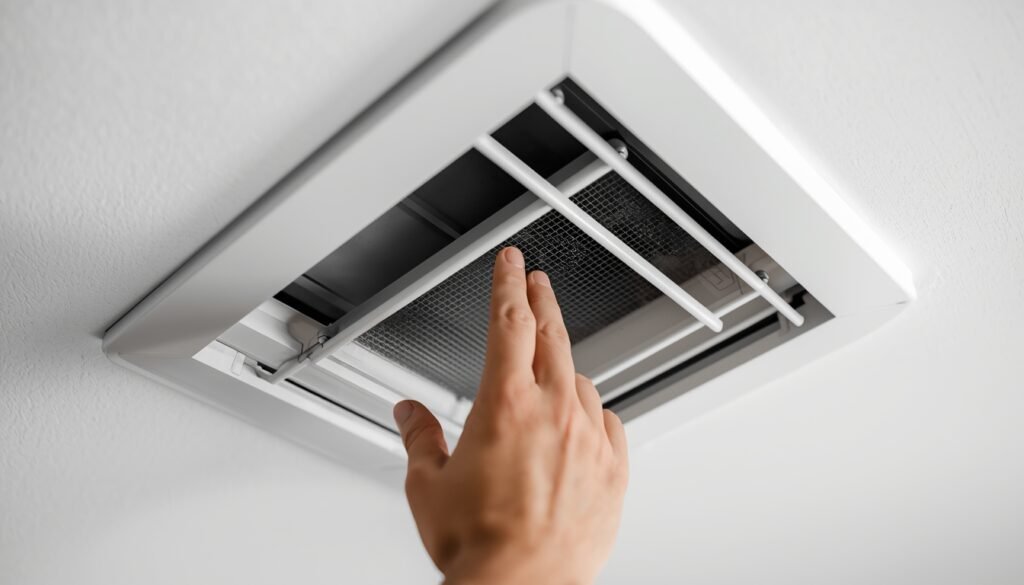
This is the most obvious sign, and yet most people overlook it. Take a close look at your supply and return vent covers. If you see a grey or brown ring of dust around the edges, and that ring reappears within a day or two of wiping it down, your ducts are pushing contaminated air directly into your living spaces.
Normal dust settles slowly over weeks. Dust that keeps reappearing around vents after cleaning is being actively blown out of your ductwork. That means the inside of your HVAC system has years of built-up debris that no amount of surface cleaning will fix.
What to look for specifically:
- Grey or dark rings forming around vent covers on walls and ceilings
- Visible particle buildup inside the vent opening when you remove the grille
- Furniture near vents collecting dust faster than the rest of the room
- A fine grey film on surfaces even after thorough dusting
Musty or Stale Odors When the HVAC Runs
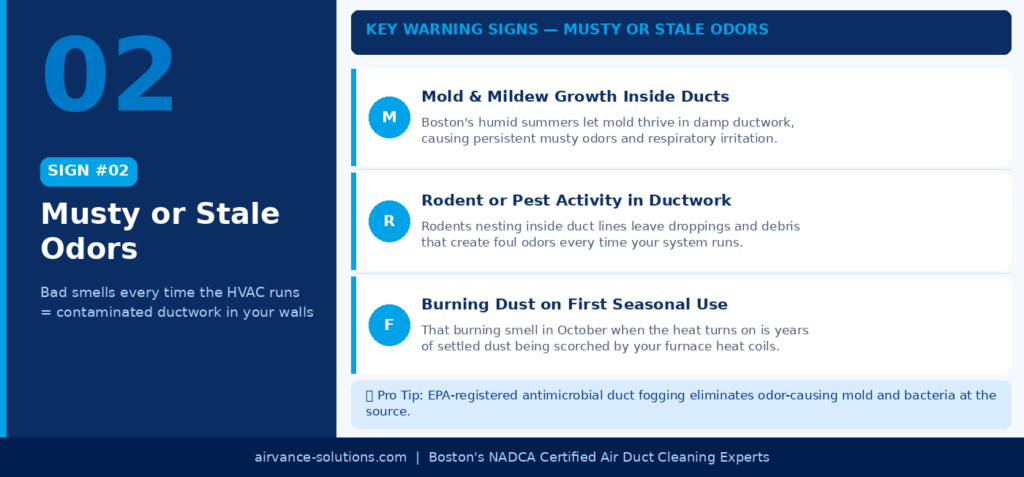
Your HVAC system should circulate air, not bad smells. If you notice a musty, stale, or burning odor every time your heat or air conditioning kicks on, the source is almost always inside your ductwork. The smell disappears quickly, which makes people think it’s normal. It’s not.
Here’s what’s actually happening: your ducts store odor-causing material, and every time your HVAC blower fires up, it sends those odors through every room in your home or building. The three most common culprits are mold growth, rodent activity, and settled dust being scorched by your furnace heat.
The three most common odor sources in Boston HVAC systems:
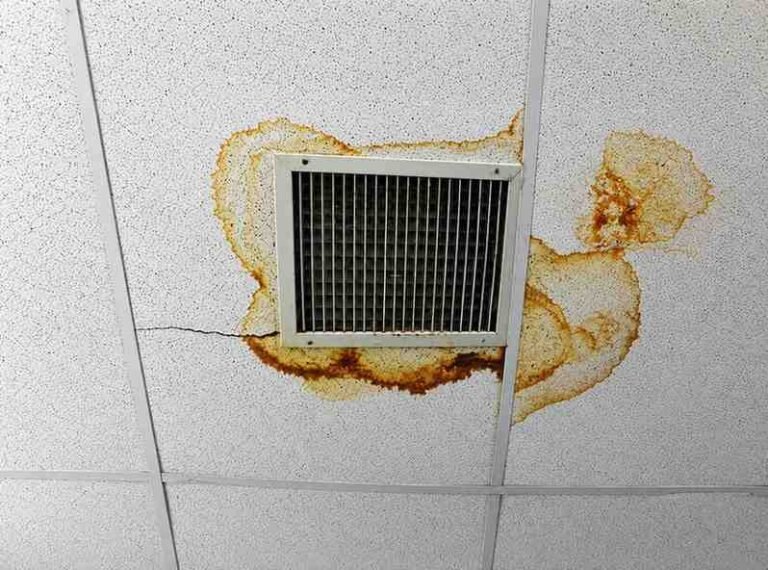
- Mold and mildew: Boston’s humid summers create the perfect conditions for mold to grow inside damp ductwork, especially in older buildings with poor insulation.
- Pest activity: Rodents and insects find their way into ductwork and leave droppings, nesting material, and in some cases, remains, all of which create persistent foul odors.
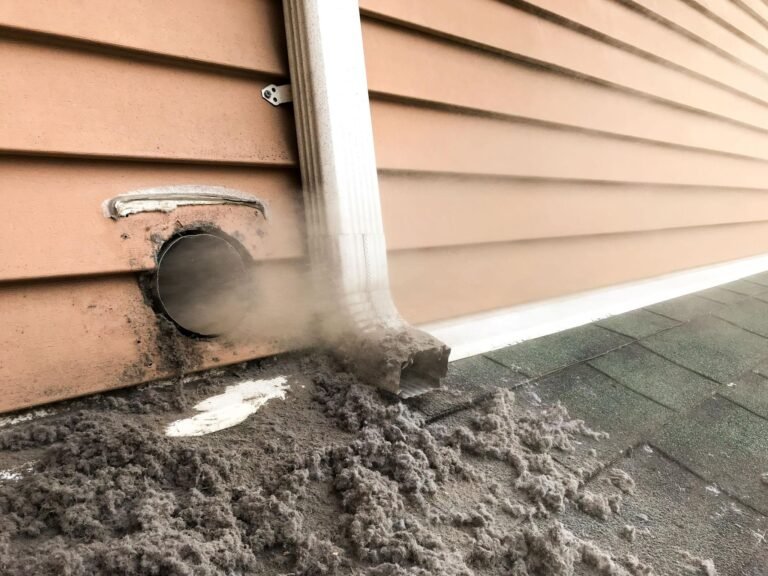
- Burning dust: That distinct burning smell when you first turn on the heat in October is not a quirk of your furnace. It’s years of settled dust being scorched as hot air passes over it.
Your Energy Bills Keep Climbing
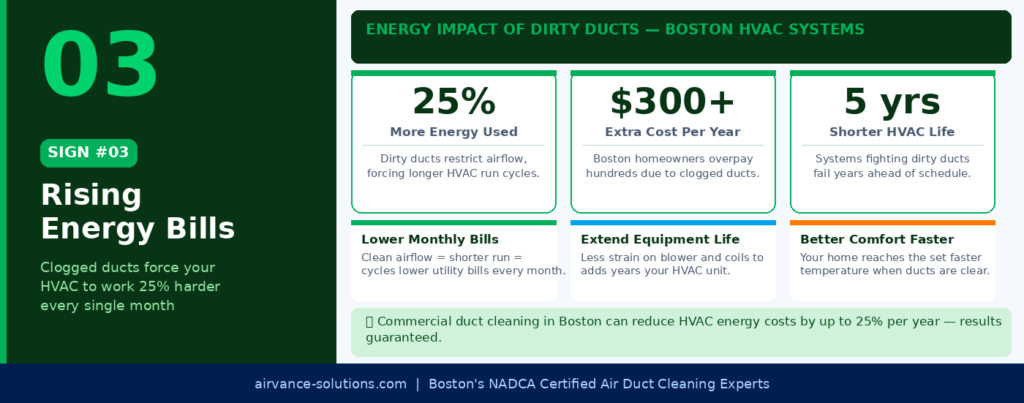
Boston winters are brutal, and Boston summers are no picnic either. Your HVAC system runs hard all year. But if your energy bills keep going up without any obvious explanation, no new appliances, no major lifestyle changes, your ductwork is one of the first places to look.
When debris builds up inside your duct system, it restricts airflow. Your HVAC unit then has to work significantly harder to push the same amount of conditioned air through the building. It runs longer, cycles more often, and consumes more electricity or gas, all without making your home any more comfortable.
Clean ducts allow air to flow freely, which means your system reaches the target temperature faster and shuts off sooner. The result is a measurable drop in your monthly utility bill, and a longer lifespan for your heating and cooling equipment.
Uneven or Weak Airflow Across Rooms
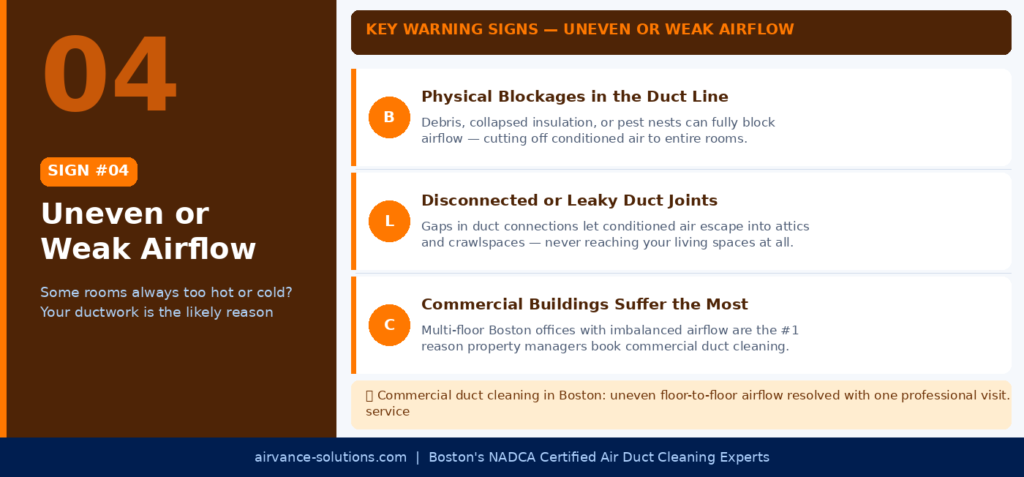
Do you have rooms in your home that are always too hot in summer and too cold in winter, no matter how you adjust the thermostat? Or a room at the end of the hallway that barely gets any air? This is one of the most common complaints we hear from Boston homeowners, and dirty or damaged ductwork is almost always the cause.
When debris accumulates inside the duct system, it creates partial blockages that restrict airflow to specific areas of the building. Certain rooms end up with strong airflow while others get almost none. The thermostat keeps calling for more heating or cooling, your system keeps running, and the problem rooms never actually reach a comfortable temperature.
The three main causes of uneven airflow in Boston buildings:
- Physical blockages: Debris, collapsed duct insulation, or even bird or rodent nests can completely block airflow in a duct branch, cutting off an entire room.
- Disconnected or leaky joints: In older Boston buildings, duct joints and connections break down over time. A gap in a duct connection lets your conditioned air escape into the attic, basement, or crawl space before it ever reaches the room you’re trying to heat.
- Collapsed flexible ducting: Many Boston homes have flexible duct sections that can kink, sag, or collapse over time — drastically reducing airflow to connected vents.
Allergy or Respiratory Symptoms Get Worse Indoors
Here’s a test: Do your allergy symptoms — sneezing, coughing, itchy eyes, or a runny nose — get noticeably worse when you’re inside your home or office? Do you feel better when you step outside? If the answer is yes, your indoor air quality is likely the problem, and your air ducts are probably contributing to it.
Your ductwork acts like a giant storage container for airborne allergens. Every time the system runs, it recirculates what it has collected — pollen, pet dander, mold spores, dust mites, and fine particulates — directly into your breathing air. Boston’s spring pollen season is already severe. When you add ductwork that has been storing allergens for years, the indoor environment becomes significantly worse than outside.
The most common allergens we find in Boston ductwork:
- Seasonal pollen: Boston’s spring pollen counts are among the highest in New England. Your HVAC system draws this in from outside and deposits it inside your ducts, where it keeps recirculating long after the pollen season ends.
- Pet dander and hair: Pet owners in Boston should clean their ducts every 2 to 3 years. Pet dander coats duct walls and continues to trigger allergy flare-ups even when the pet is in another room.
- Dust mites: Dust mite colonies thrive in the debris that builds up in ductwork. Their waste particles are a major trigger for asthma and year-round allergic rhinitis.
- Mold spores and VOCs: Mold in ductwork releases spores and volatile organic compounds into your air supply. This is especially dangerous for children and people with compromised immune systems.
How Often Should You Clean Your Air Ducts in Boston?
The National Air Duct Cleaners Association (NADCA) recommends cleaning every 3 to 5 years for most homes. But Boston’s unique environment pushes that recommendation closer to every 3 years for the following situations:
- You live in a historic brownstone, triple-decker, or pre-1980s building
- You have pets in the home
- Anyone in the household has asthma, allergies, or respiratory issues
- You recently completed a renovation or major construction project
- You moved into a new home and don’t know the duct cleaning history
- Your property is near active construction zones (Seaport, MBTA projects, downtown)
For commercial properties, restaurants, and office buildings, we recommend annual commercial duct cleaning in Boston to maintain air quality standards, meet Massachusetts IAQ regulations, and keep energy costs under control.
The Bottom Line
Air duct problems are sneaky. They build up slowly over years, a little more dust, a little higher energy bill, a few more sneezes, until one day you realize the air in your home doesn’t feel clean anymore. By the time the signs are obvious, your HVAC system is already working overtime and your indoor air quality is already suffering.
The good news is that a professional air duct cleaning is one of the most cost-effective home maintenance investments you can make. You get cleaner air, lower energy bills, a longer-lasting HVAC system, and a measurable improvement in how your home feels, all from a single service visit.
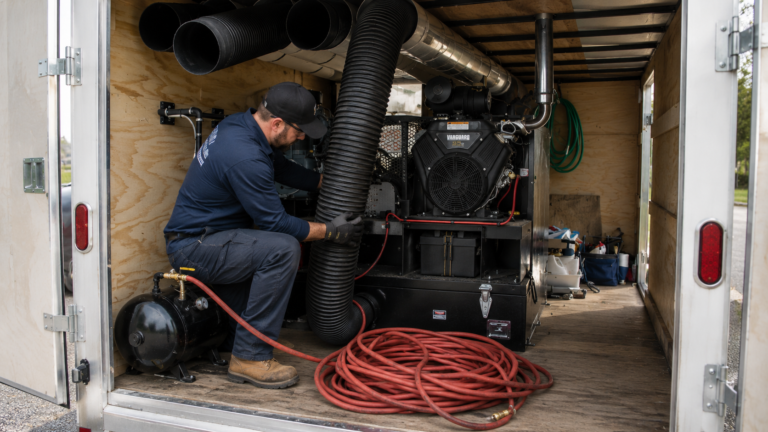
Whether you need residential air vent cleaning in a historic Beacon Hill home or commercial duct cleaning in Boston for a multi-floor office building, our NADCA-certified team is ready to help. We show up on time, we show you the problem before we fix it, and we leave your property spotless.