

Winter in Boston is a relentless force. From the biting winds off the Atlantic to the historic Nor’easters that blanket the city in feet of snow, your home’s heating system is your primary line of defense. However, even the most expensive furnace in a Back Bay brownstone or a South End condo can fail if the delivery system, the ductwork, is compromised.
For homeowners looking to survive the freeze without draining their bank accounts, air duct repair is the most overlooked strategy for energy efficiency. When your ducts are leaking, you aren’t just losing air; you are throwing away money that should be keeping your family warm.
The Anatomy of Boston’s Heating Crisis
Boston’s architecture is legendary, but its ventilation often isn’t. Many homes still rely on ductwork installed decades ago. Over time, the vibration of the blower motor, the expansion and contraction of metal during temperature shifts, and even the settling of the house create gaps.
Target Audience for This Guide
- The Budget-Conscious Homeowner: Residents facing rising utility rates from National Grid or Eversource.
- Historic Home Owners: Owners of older properties with complex, aging HVAC layouts.
- New Parents and Health-Conscious Renters: People worried about indoor air quality during the “sealed-window” months.
- Property Managers: Professionals aiming to reduce maintenance overhead and tenant complaints.
Why Leaky Ducts Are “Energy Vampires”
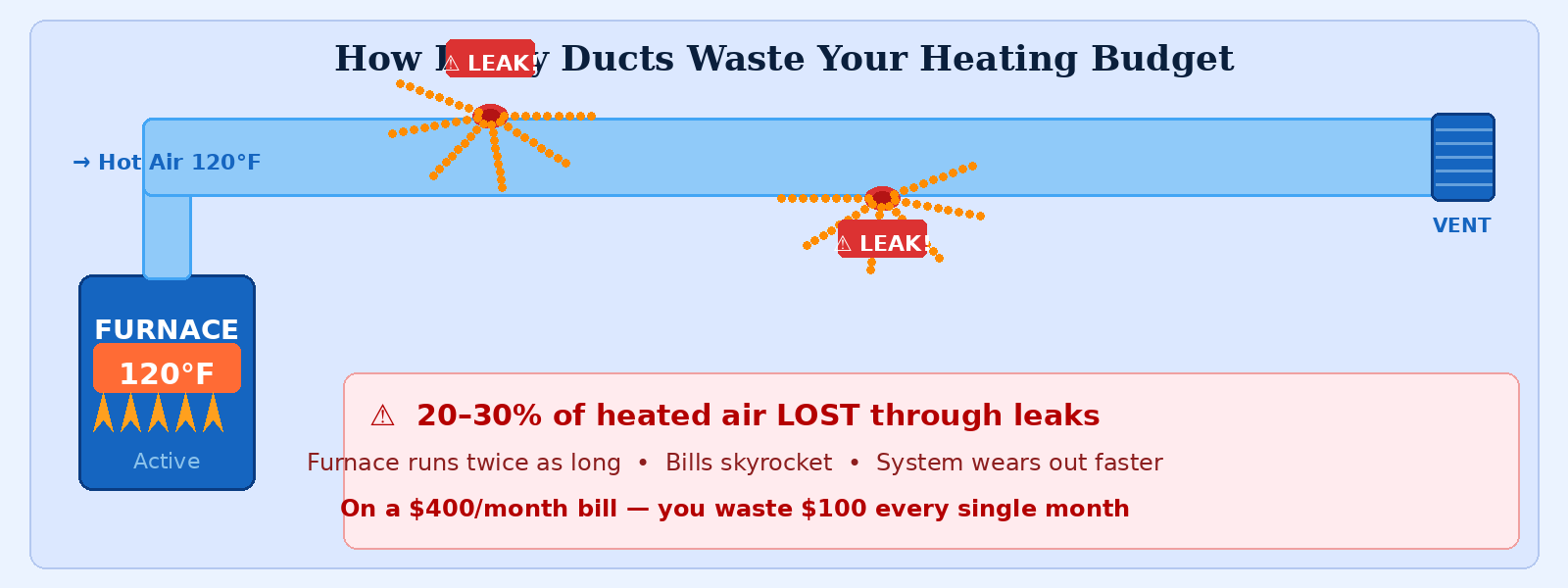
In a typical house, about 20% to 30% of the air that moves through the duct system is lost due to leaks, holes, and poorly connected ducts. In the winter, this is catastrophic. Your furnace heats the air to roughly 120°F (49°C), but if that air escapes into a freezing crawlspace before reaching your bedroom, your furnace has to run twice as long to meet the thermostat’s demands.
The Cost of Neglect
When you ignore the need for ductwork sealing and repair, you pay for it three times:
- High Monthly Bills: Your heater consumes more gas or electricity.
- Shortened System Lifespan: The “short-cycling” of your furnace wears out the heat exchanger and blower motor.
- Uneven Comfort: One room feels like a sauna while the kitchen feels like a refrigerator.
Evaluating the HVAC Duct Leak Repair Cost
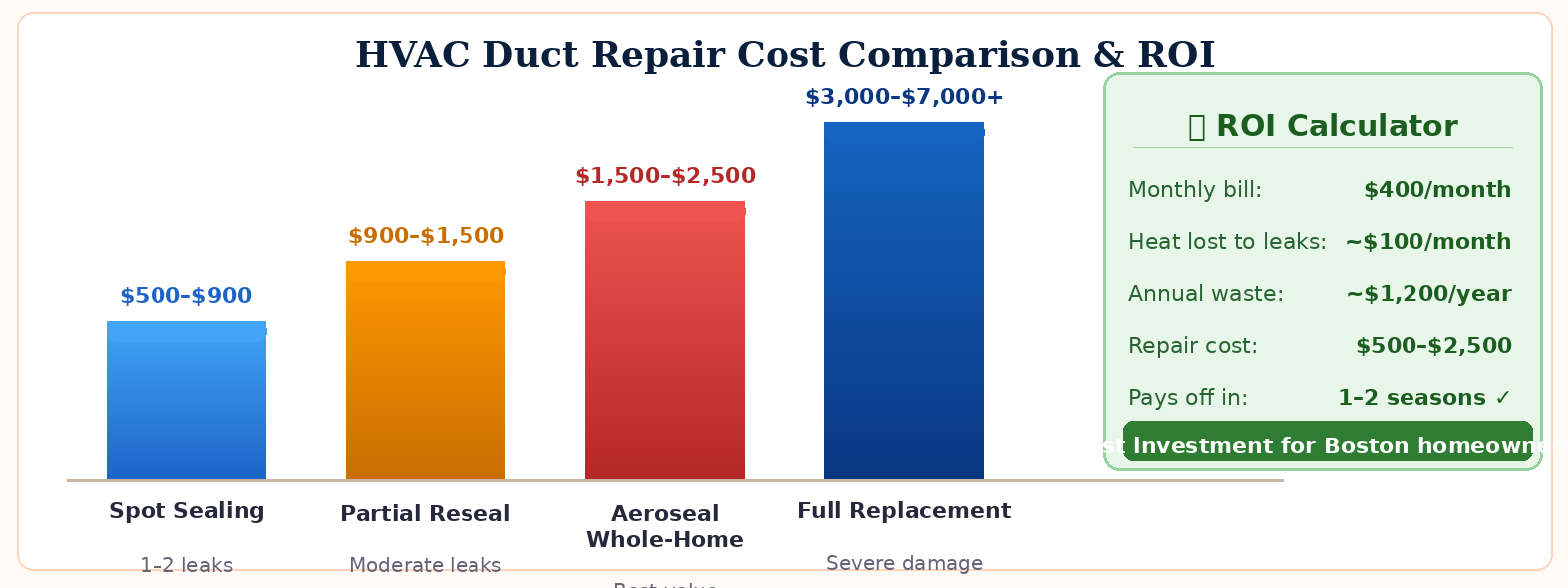
Many Bostonians hesitate to call a pro because they fear the HVAC duct leak repair cost. On average, professional sealing can range from $500 for minor fixes to $2,500 for a whole-home aerodynamic sealing process (like Aeroseal).
However, consider the Return on Investment (ROI). If your heating bill is $400 a month during a Boston winter, and you are losing 25% of your heat, you are wasting $100 every single month. Within two or three seasons, the repair pays for itself. Beyond the math, the added comfort of a home that actually stays warm is priceless.
When to Choose Residential Ductwork Replacement
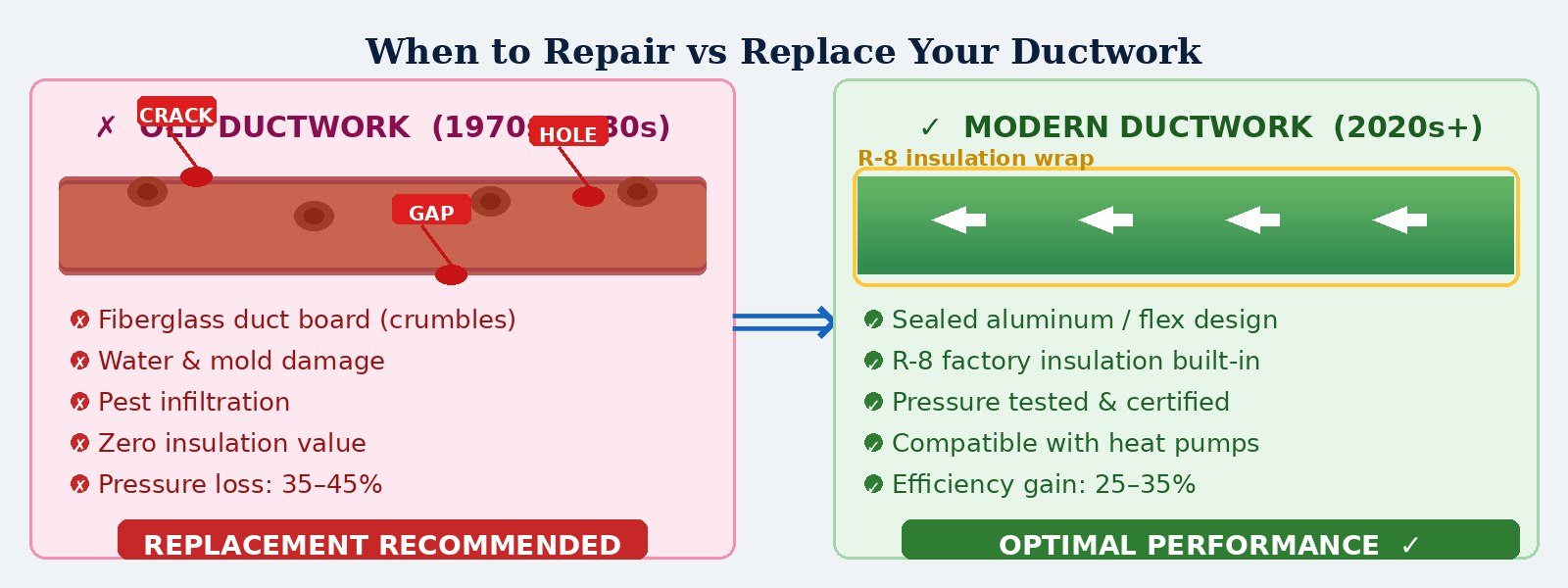
Repair is great, but it isn’t always the solution. If your ducts are made of “fiberglass duct board” from the 1970s or if they have been severely damaged by water or pests, residential ductwork replacement is the smarter move.
Modern ducting is better insulated and designed for the high-pressure fans found in today’s high-efficiency furnaces. If you are upgrading to a high-efficiency heat pump or a 96% AFUE gas furnace, keeping your old, leaky ducts is like putting a Ferrari engine in a bicycle frame—it won’t perform.
The Science of “Stack Effect” in Boston Homes
In tall, narrow Boston homes, heat naturally rises. This is known as the “stack effect.” As hot air escapes through leaky ducts in the upper floors or attic, it creates a vacuum that pulls cold, icy air in through the basement.
By prioritizing air duct repair, you break this cycle. Sealing the ducts stops the “vacuum” from forming, keeping the warm air inside your living space where it belongs. This is especially vital for triple-deckers and townhomes where vertical air movement is aggressive.
Specialized Care: Flexible Duct Repair and Replacement
Not all ducts are made of metal. Many modern Boston additions use “flex duct”—a plastic-covered wire coil. While easy to install, these are incredibly fragile. A single heavy box stored in the attic can crush a flex duct, cutting off heat to an entire room.
Flexible duct repair and replacement is a common winter service. Technicians must ensure these ducts are pulled taut; any “sags” in the line create air turbulence that slows down the heat. If you notice a specific room in your house is always five degrees colder, a crushed flex duct is often the culprit.
Protecting the Exterior: Ductwork Insulation Repair
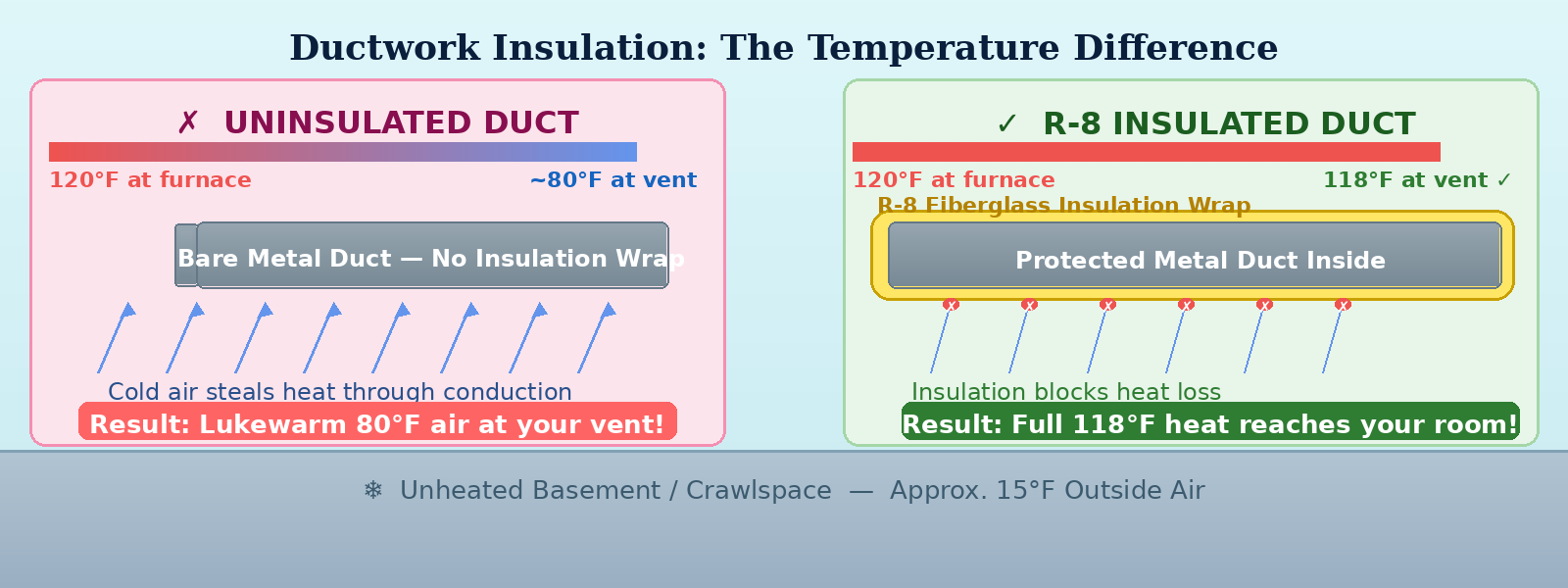
If your ducts run through an unheated basement or a vented crawlspace, they are essentially sitting in a refrigerator. Even if there are no leaks, the metal gets cold, and the air inside loses its heat through “conduction.”
Ductwork insulation repair involves wrapping these pipes in high-R-value fiberglass or foam. This keeps the air at 120°F (49°C) all the way from the furnace to the vent. Without proper insulation, you might be pumping “lukewarm” air into your rooms, which never satisfies the thermostat.
The Health Angle: Why Clean Ducts Matter in Winter
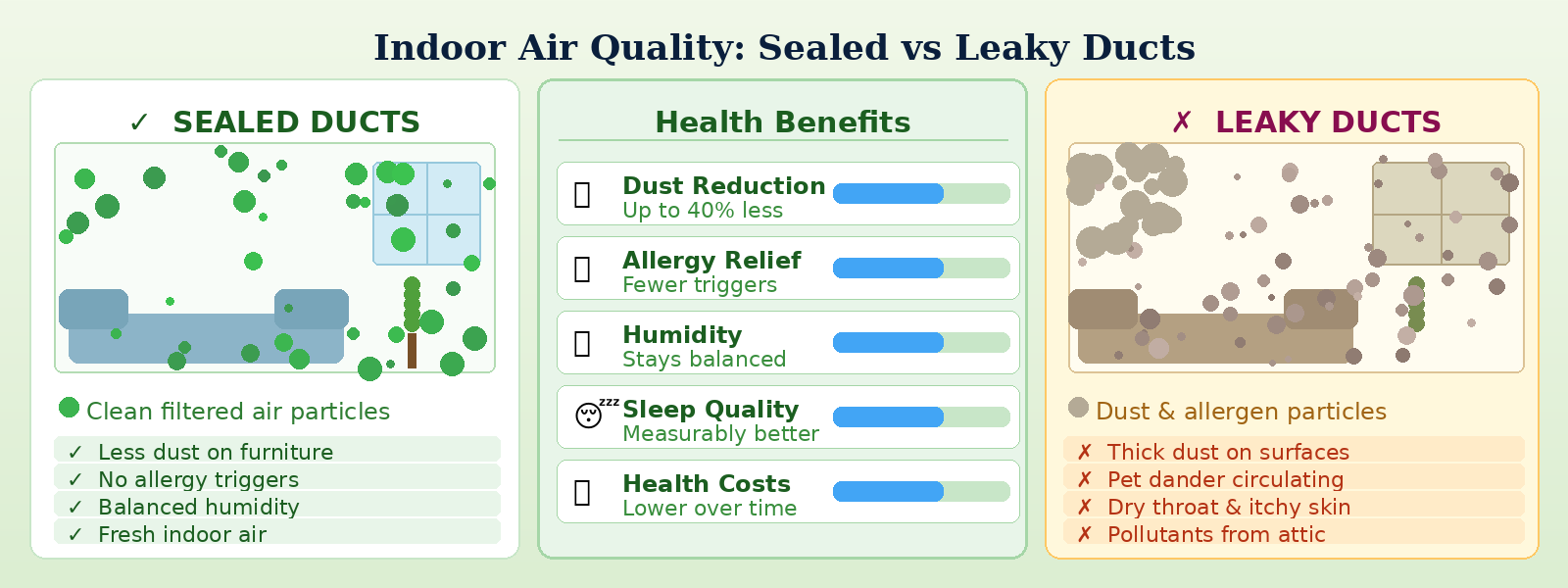
In Boston, we spend roughly 90% of our time indoors from December to March. During this time, the “indoor air envelope” is sealed tight. If your ducts are filled with dust, pet dander, or construction debris, you are breathing that in every time the heat kicks on.
- Reduced Dusting: If you find a thick layer of grey dust on your TV every two days, your ducts are likely pulling in dust from the attic or basement through leaks.
- Allergy Relief: Professional cleaning combined with air duct repair keeps allergens outside the system.
- Humidity Control: Leaky ducts can mess with your home’s humidity levels, leading to that “dry throat” feeling or itchy skin in the winter.
The Danger Zone: Emergency Air Duct Repair Services
Sometimes, a duct issue isn’t just an efficiency problem—it’s an emergency. If a main trunk line collapses during a sub-zero night, your home’s temperature can drop to dangerous levels in hours.
Emergency air duct repair services are critical when:
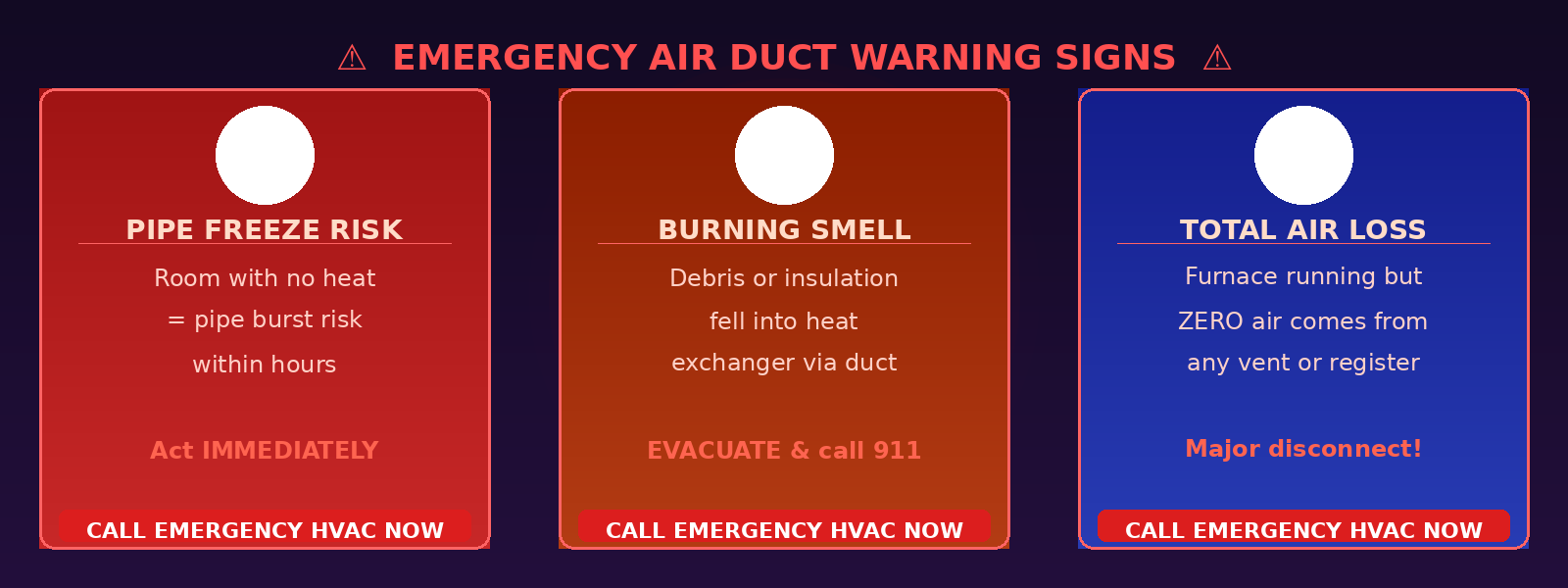
- Pipe Freeze Risk: A room with no heat is a room where plumbing can burst.
- Strange Smells: A “burning” smell could indicate debris or insulation has fallen into the heat exchanger via a broken duct.
- Total Air Loss: If the furnace is running but no air is coming out of any vents, a major disconnection has likely occurred.
DIY vs. Professional: The Truth About “Duct Tape”
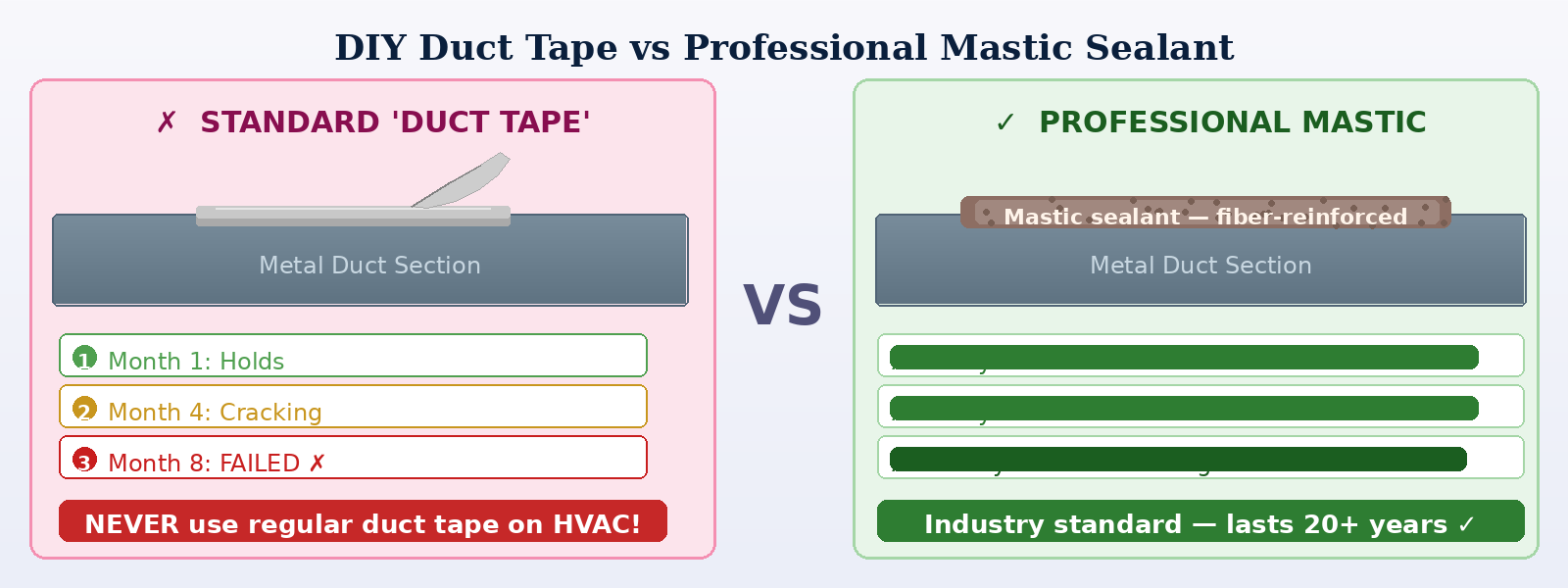
Despite the name, you should never use standard silver duct tape to fix your ducts. The adhesive dries out and fails within months under the heat of a furnace.
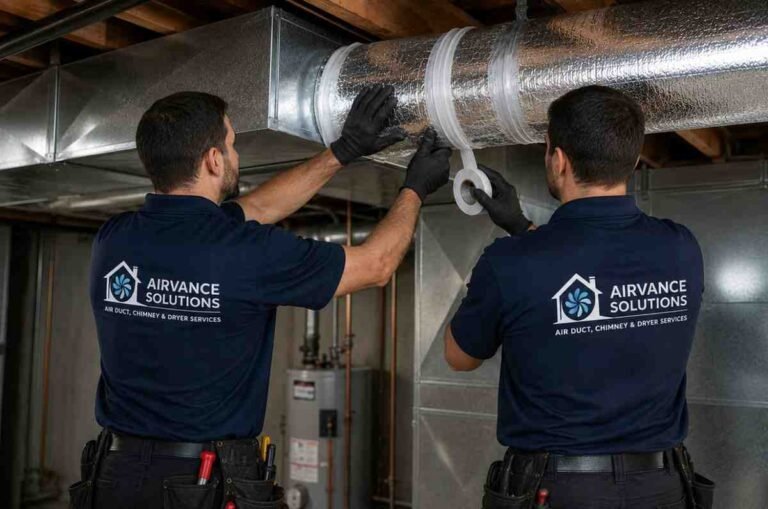
Professional air duct repair involves “Mastic” (a gooey, fiber-reinforced paste) or specialized foil tape rated for high temperatures. While you can seal visible leaks in your basement yourself, a professional uses a “Blower Door Test” to find the leaks you can’t see—the ones hidden behind your drywall.
Strategic Maintenance Checklist for Bostonians
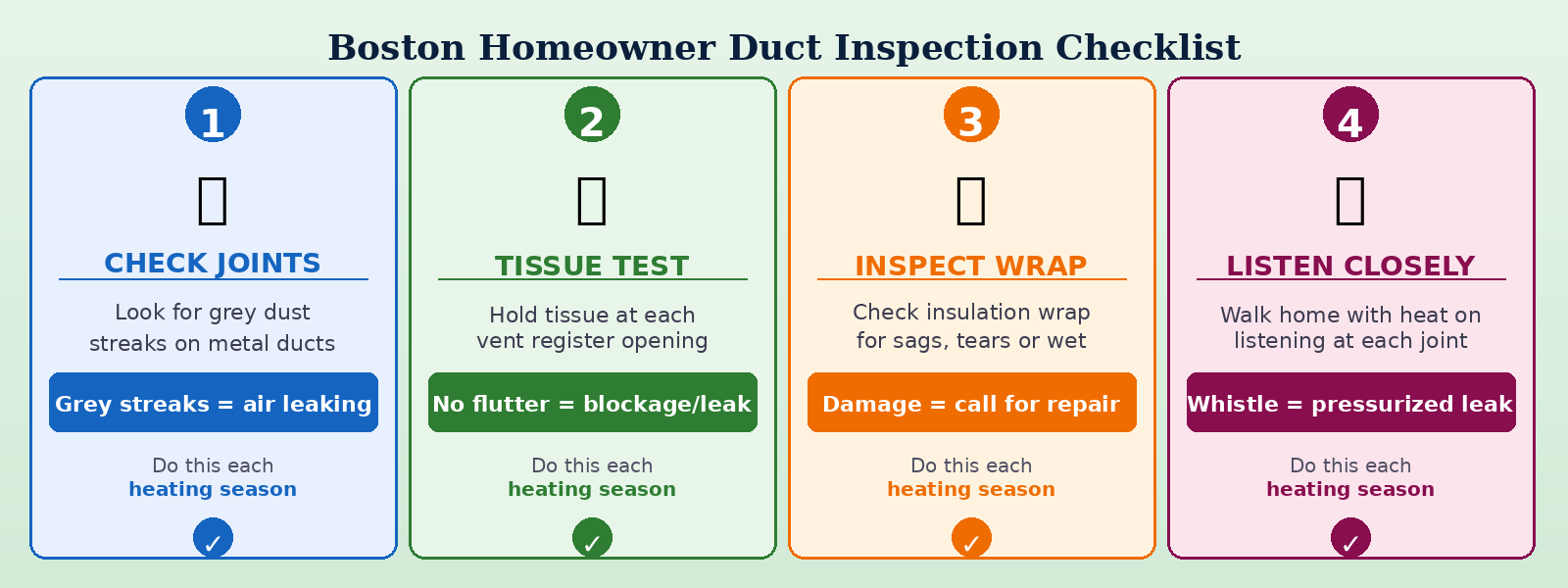
To maximize your energy savings this winter, follow these steps:
- Check the Joints: Look for grey “dust streaks” on the outside of your metal ducts; these indicate air is leaking out.
- Verify Airflow: Hold a piece of tissue up to each vent. If it doesn’t flutter strongly, you have a blockage or a leak.
- Inspect the Insulation: If the white or yellow wrap around your ducts is sagging or wet, call for ductwork insulation repair immediately.
- Listen for “Whistling”: A high-pitched whistle usually means air is being forced through a tiny crack at high pressure.
Conclusion: A Warmer, Cheaper Winter
Improving your home’s efficiency doesn’t always require a $20,000 window replacement. Often, the most significant gains come from fixing what you already have. By investing in air duct repair, you ensure that every dollar you spend on heating actually goes toward keeping your family warm.
Don’t wait for the next blizzard to find out your heat is escaping into the attic. A sealed, clean, and insulated duct system is the secret to a cozy Boston winter and a much lower energy bill.